Our ‘Living the Chinese Way of Life’ project

In November 2012, I spent 3 months in China, 2 of which were spent in an apartment in Kunming, living the ‘Chinese Way of Life’ with my kids.  It was an adventure and journey for our family to just ‘be’ in China, wander the streets and parks, shop for our food, and meet new friends.  (The third month was to study at Xian University).

I didn’t have a blog back then, but I did put together some piks and a little diary of our language and cultural experiences.  If you are planning a family trip to China, or a cultural experience anywhere with your young kids, or if you are a teacher of languages interested in our perspectives, then please click on the pdf docs below.

Our stay in Kunming

our stay in kunming continued

My little girl put together her own little project on Green Lake Park.  She worked out and typed the Chinese by herself, with minimal guidance.  For a then 7 year old, not a bad effort!

Green Lake Park

I put together some piks and some notes of my month studying in Xian:

Study in Xian

If you have any questions about taking your children for an extended time to China, please don’t hesitate to ask!

Cheers!

Donna

Tones and doing a poo!

Can you learn a little about Mandarin Tones from your child?  YES!

Some say this is the hardest part for the learner of Chinese to grasp…TONES!   I must admit, they are strange for adult learners to get used to, and to distinguish when listening to native speakers, who nod with a smile when asked to ‘say it again slower’ but don’t seem to actually say it any slower the second time, on top of the fact that Chinese is a language built on homonyms, makes understanding spoken Chinese very difficult indeed!!!!  And even for children, if they start learning Mandarin at middle school, these tones are so strange and weird compared to English, that students at this age become inhibited/embarrassed to actually speak Chinese with the correct tone.

But for pre-school and primary aged children, they just enjoy the delightful new sounds they are hearing, and copy the Mandarin teacher’s rising and falling tones without any effort whatsoever!  So, if they do continue to learn at middle school, the tones are natural, not ‘weird and embarrassing’.

PLEASE PLEASE PLEASE Australian Government, fund more teachers to teach Mandarin in early childhood!!!

Not much formal teaching of syllable sounds and tones are done in the Early Years classroom! It’s all done through story and song.  But there are a few things I do to help children visualise the voice patterns that they are hearing.

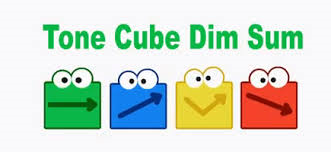
During the Sesame Street episodes, (see a blogpost on Sesame Street here) children watch a ‘TONE CUBE DIM SUM’ segment.  In typical Sesame Street style they have a 神秘文字  ‘Mystery Character’ of the day, animated with its tone, and a chance for children to say the character multiple times with a visual of the animated tone mark.  We move our hands as well as our voice in the same tone movement.

sesame street tone cube

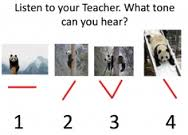
Sometimes we read a story or sing a song that has opportunities to have fun with tones and how the meaning changes.  I often bring the panda tone pictures out when we do this, another visual of the tone patterns.  (Taken from creativechinese.com)

panda tones

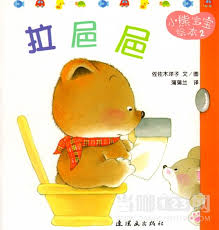
A book we have read this term that highlights how tones can be fun in Chinese is 拉㞎㞎 (Lā bǎ ba / Do a poo).  I bought this set of pre-school related stories last time I was in China.  You can read these books on an app. If you copy and paste  小熊宝宝 (Little precious bear) in the app store you will get an app that has these books inside, about Little Bear and his Early Years world!  Unfortunately there is no sound on the app, so you must be able to read Chinese to read them to your kids.  But the children may enjoy looking at the pictures and looking at the Chinese script, and may even be able to repeat some of the lines, as we read this book often.  It will make them feel good that they can read Chinese!

doing a poo book


As well as the fun toilet humour value the book brings, I often mention that ‘Dad’ in Chinese is 爸爸 (Bàba).  We look at the Panda sliding down the slide, and make sure that our voice goes ‘down’ as we say 你好爸爸 (Nǐ hǎo bàba / Hello Dad). Then we work out what we are saying if we say ‘baba’ with the Panda who is confused and doesn’t know if he is going down or up the tree, in third tone ‘bǎba’. The children are amused, because they can easily work out from the story we have been reading that it means poo!  So if your child comes home to Dad, and says  ‘Nǐ hǎo bǎ ba’ and laughs their head off, you now know that they are playing a little joke on you and saying ‘Hello Poo!’.

A side note on ‘Poo’:  The general word for doing a wee or a poo in Chinese is 便便biànbian.  It literally means ‘convenience’, a 大便便 (Dà biànbian) is a big convenience, or a ‘poo’, and a 小便便 (xiǎo biànbian), or little convenience is a ‘wee’.  The word 㞎㞎 (bǎ ba) is the kind of word you would use with a pre-schooler, like ‘ooooh a little poo poo!’ 🙂

Counting Backwards!

We count lots in class to make sure counting in Chinese comes as natural as counting in English!

Counting backwards can be tricky though, but feels good when you can do it without thinking!

Of course it’s best to learn in a song! Here is my little girl singing a song that will get you counting backwards in Chinese no problems!


Here are the lyrics:
一二三四五六七
七六五四三二 一
一二三    三二一
一二三四五六七

Yī’ èr sān sì wǔ liù qī
Qī liù wǔ sì sān èr yī
Yī’ èr sān     sān’èr yī
Yī’ èr sān sì wǔ liù qī

When you get more confident, you can add a little record scratching rap to the last line, saying the number four 四 3 times, (like my little girl does in the video) like this:
一二三四四四五六七

Heard the tune before? We used the popular Chinese song ‘Where is my Friend?’ for the tune, which you can see below:

You can see how we use this song in our class on another blogpost of mine the ‘Where is my Friends? Blogpost.

Counting Number Rap!

Counting Number Rap!

We often have a sing and a rap dance to this song in class!  It’s a nice song for parents also as it has the roman numeral, Chinese character,  pinyin, and of course sound to help you count to ten with your little one! Because it is a rap, the tones are nice and clear.

YoYo Chinese produced the video, click on the link to find a parent tip blog postal about YoYo Chinese, an online video course that I can recommend for parents interested in learning Chinese to make learning Chinese a family affair alongside their little ones!

2014 Term 2 – Exploring 上下

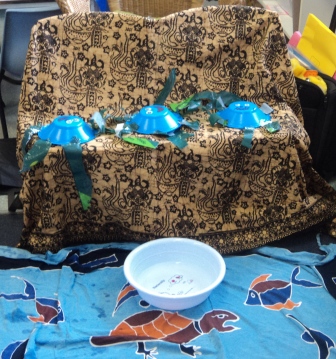
In our preschool and transition classes we are learning a new song ‘3 Jelly Fish’.  I sometimes do this song when we do a sea theme, but this time I have used it as a springboard to explore 上 (up) 下 (down).  You can see the lyrics to the song on the 3 jelly fish blogpost.  In the song the jelly fish jump off the rock, and jump back on the rock.  Here is our pretend rock and sea to sing the song in class!

Our 3 Jelly Fish rock and sea for our song!

Our 3 Jelly Fish rock and sea for our song!

Over the weeks I will be reading stories and singing songs that have 上 and 下 in them.  After learning the song for the first time this week, I have already had a few students make connections to previous stories and songs that we have used 上 and  下 in!  In  a few weeks I will make a post of all these connections, so that we can see lots of other ways that we can use 上下!

A great song that we will be learning to reinforce this, is the Groovi Pauli ‘Going Up Going Down’ song, which you can watch by clicking on the song name!

If you want to have fun at home, make some Jelly Fish, a rock and a bowl of water, like the one we have in class, and you can act out the song with your little one.  Talk about making the jellyfish out of waterproof materials so that they don’t go soggy and rip!  We used plastic bowls and cut up plastic shopping bags for tentacles.  You could also talk about the correct disposal of plastic bags so that we don’t hurt our Jelly Fish in the sea too!

I don’t have a link to a video, as I translated this song myself. The more we sing it, the more they will be able to teach you the right way to sing it!  I will try and make a video of my kids singing it for you soon!

上下 -Going Up Going Down

This is a great Groovi Pauli song/video for exploring the uses of 上 and 下.

The chorus goes like this:

shàng shàng shàng going up up up,
xià xià xià going down down below

上上上going up up up, 下下下going down down below.

Activity

In the up down song we sing in class, a few examples of shàng and xià are explored.  Use these around the house /community.  Let Groovi Pauli help you pronounce these by watching the video lots of times!

shàng chuáng – Getting in bed
shàng chē – Getting in the car
shàng lóu – Going up the stairs
shàng kè – starting class

xià chuáng – getting out of bed
xià chē – getting out of the car
xià lóu – going down the stairs
xià kè – finishing class

数学 – Maths 1

One of our goals this year is to try and do some of our school subjects in Mandarin.  Maths is a subject we are going to try and talk about more in Mandarin.   Starting with some basics though!  We have a chart on a whiteboard at home, where when the kids do their chores for the day, they get a smiley face which equals a dollar…at the end of the week their dollars get added up for pocket money.  My little boy’s chart  one day was totaling $4.  He sneakily changed it, meaning to change it to $5, but wrote his 5 back to front, so it ended up being $2!  He won’t make that mistake again in a hurry!

So, we got out a book that we bought in China that has a rhyme in it comparing the shape of numbers to other objects.  We then looked to see if we could find a video/ song to the rhyme that we have in our book. We couldn’t find a rhyme with the exact words in our book, but we found many different versions.  As well as enabling the kids to see pictures in numbers, we could talk about the use of 像 (when something is like something).  Also, because these are Chinese rhymes, the things that the numbers look like, may not be familiar to a western kid, so a great opportunity to talk about what twisted fried dough sticks, sickles, or hanging gourds are!!

Here is the rhyme in our book. of course we have pictures to go with it, so you can see the shape of the number compared to the object.  But if you copy and past the Chinese into google images you will find plenty of piks if you wanted to make this rhyme into your own book.

0像鸭蛋圆滚滚,  1 像铅笔能写字,  2像小鹅水中游

3像耳朵听音乐,  4像小旗迎风飘,  5像小钩能钓鱼

6像蜗牛爬呀爬,  7像镰刀割青草,  8像葫芦藤上挂

9像蝌蚪水中游

Líng xiàng yādàn yuángǔngǔn                  0 is like a duck egg, plump and round
Yī xiàng qiānbǐ néng xiězì                          1 is like a pencil writing characters
Èr xiǎo é shuǐzhōng yóu                             2 is like a little goose swimming in the water
Sān xiàng ěrduo tīng yīnyuè                     3 is like an ear listening to music
Sì xiàng xiǎo qí yíngfēng piāo                   4 is like a little flag dancing in the wind
Wǔ xiàng xiǎo gōu néng diàoyú               5 is like a hook for fishing
Liù xiàng wōniú pá ya pá                          6 is like a snail crawling
Qī xiàng liándāo gē qīngcǎo                     7 is like a sickle to cut grass
Bā xiàng húlu téng shàng guà                  8 is like a gourd hanging from a vine
Jiǔ xiàng kēdǒu shuǐzhōng yóu                 9 is like a tadpole swimming in the water

Or you can find other versions on youtube /tudou etc.  Here is one:

The pinyin lyrics to this version are:

Yī xiàng qiānbǐ xì yòu zhǎng             1 is like a pencil thin and long
Èr xiàng xiǎoyā shuǐshàng piào       2 is like a little duck floating on the water
Sān xiàng ěrduo tīng shēngyīn        3 is like an ear listening to sounds
Sì xiàng xiǎo qí suí fēng yáo             4 is like a little flag waving in the wind
Wǔ xiàng yī gōu guà yī mào             5 is like a clothes hook hanging clothes
Liù xiàng dòuyá liězuǐ xiào               6 is like beansprout grinning
Qī xiàng liándāo gē qīngcǎo             7 is like a sickle cutting grass
Bā xiàng máhuā níng yīdào              8 is like a twisted fried dough twist
Jiǔ xiàng sháo zǐ néng chéng fàn     9 is like a spoon for dishing out rice
Líng xiàng jīdàn zuò dàngāo           0 is like a hen’s egg for making cake

擦屁股!Wiping bottoms!

TOO MUCH INFORMATION WARNING – read on only if you have a stomach for wiping bottoms!

‘I’ve finished, come and wipe my bum…’

As a parent you’ve heard it many times…It’s everyday language in the household  – so essential Mandarin – But it’s the toilet humour that makes young kids willing to repeat the dialogue and sing the song,  ‘laughing their heads off motivation’, whilst subliminally learning some pretty useful Mandarin vocab and grammar structures!

Check out the video:

With my little boy, the toilet humour is enough to embed some Mandarin in his head!  With my 8 yr old little girl though, she has picked up on 以后, 然后 , and 最后  (after, later and finally) making connections with other stories she has been learning in Mandarin, she is also using these in her English writing at school.  The song has also led to an exploration of the verb 擦 (to wipe), and where we have heard it before.  We’ve used it often when we have been drying ourselves after bathtime, with 板擦 (whiteboard wiper), and it’s reinforced a recent new word 摩擦 after we read a science for kids article in Chinese about friction!  She also connected  半 (half) with telling the time and measurements, as we explore maths in Chinese.  It is these connections with a primary school student’s school world, in this case of math, literacy and science, after layers and layers of song and story in Mandarin, that prove we should be teaching our kids a second language in their early years!!!!!!

I have written out a transcript of the dialogue, it is repeated 3 times replaced only by the different animals, I have put the song lyrics in BOLD to distinguish from the dialogue. I had to rely on my ear for the dialogue, so if you are a native speaker and have picked up a mistake please let me know!

我会自己做, 我会擦屁股, 巧虎在房间里开心地玩着小飞机, 妈妈我下好厕所了, 请你帮我擦屁股? 巧虎,自己试试看好不好

擦屁股, 擦屁股, 卫生纸先折一半, 由前往后擦, 擦屁股, 擦屁股, 卫生纸再折一半, 由前往后擦, 屁股擦干净了!

哇好棒了!巧虎会自己擦屁股了!

小熊, 在房间里,玩着小汽车

小老鼠,正在房间看书

我们都会自己擦屁股

擦了屁股以后,腰杆穿上裤子, 然后,要抽马桶, 最后,你必要记得洗手

Wǒ huì zìjǐ zuò, wǒ huì cā pìgu.  qiǎo hǔ zài fángjiān lǐ kāixīn de wánzhe xiǎo fēijī, māmā wǒ xià hǎo cèsuǒle, qǐng nǐ bāng wǒ cā pìgu? Qiǎo hǔ, zìjǐ shì shìkàn hǎobù hǎo

Cā pìgu, cā pìgu, wèishēngzhǐ xiān zhé yībàn, yóu qiánwǎng hòu cā, cā pìgu, cā pìgu, wèishēngzhǐ zài zhé yībàn, yóu qiánwǎng hòu cā, pìgu cā gānjìngle!

Wa hǎo bàngle! Qiǎo hǔ huì zìjǐ cā pìgule!

Xiǎo xióng, zài fángjiān lǐ, wánzhe xiǎo qìchē…

Xiǎo lǎoshǔ, zhèngzài fángjiān kànshū…

Wǒmen doūhuì zìjǐ cā pìgu

Cāle pìgu yǐhòu, yāo gǎn chuān shàng kùzi, Ránhòu, yào choū mǎtǒng, Zuìhòu, nǐ bìyào jìde xǐshǒu

I can do it myself, I can wipe my own bottom.  Clever Tiger in his room happily playing with his toy plane…’Mum I’ve finished on the toilet, please help me wipe my bottom?’ ‘Clever tiger, hows about you try and do it yourself?’

Wipe your bottom, wipe your bottom, first fold the toilet paper in half, wipe from front to back, wipe your bottom, wipe your bottom, fold the toilet paper in half again, wipe from front to back, your bottom is now clean!

Wow, fantastic!  Clever Tiger can now wipe his own bottom!

Little Bear in his room playing with his little car….

Little Mouse, in her room reading…

We can all wipe our own bottoms!

After you’ve wiped your bottom, you can confidently pull up your pants.  Then, flush the toilet.  Finally, you must remember to wash your hands!
伦敦桥 – London Bridge

This song is fun for children to act out while they sing.  In class, we use a version on a DVD called Sing to Learn from the Wink to Learn website.  I couldn’t find a simple version on line to link to, so I have posted a video of my kids and their friends doing a little impromptu performance so that your kids can hear the song and inspire them to sing and play at home!

The words can be different depending on the version you find.  For the word ‘fall’, I have heard  used in many different versions as  下来, 下来,  下来  ( xiàlái, dǎo xiàlái, kuǎ xiàlái), all mean falling down, or crashing down etc.  The lyrics in our class DVD version are xiàlái , but my kids have used  dǎo xiàlái in their version as that is the version they are used to singing! Don’t worry, kids don’t get confused and hearing all being used at different times only gives them more Chinese vocab while they are taking it all in!
The basic lyrics (as per how my kids are singing it in the video) are as follows:

伦敦桥倒下来

倒下来   倒下来

伦敦桥倒下来

就要倒下来


lún  dūn  qiáo  dǎo  xià  lái

dǎo  xià  lái  dǎo  xià  lái

lún  dūn  qiáo  dǎo  xià  lái

jiù  yào  dǎo  xià  lái

芝麻街 – Sesame Street

I feel that if you are going to let your kids watch TV or youtube videos, you may as well get them to watch stuff in another language, especially if they are learning it at school.  Kids watch stuff for the animation, and often don’t seem to bother that it is not in English!

A good series to watch is the FUN FUN ELMO (乐乐ELMO) made by Sesame Streeet.  It is completely in Mandarin, but made especially for learners of Mandarin as a second language, so it is repetitive and easy to follow.  The series is available on Youtube.  Here is episode 1 for you, but just search for all 26 episodes.

A big thing I always stress to parents, don’t worry about your kids needing to know what every word translates to in English…as adults we tend to need this, but kids don’t! They just go along with the entertainment value, but they don’t completely switch off when they hear another language like adults do, they are actually listening and taking in the flow of the sounds.  If Chinese videos /cartoons are watched over and over in the early years, the chances of native like fluency later on are MUCH greater.

The lyrics to the Hello song are here:

你好 你好大家好, 在你身边我很开心

你好 你好大家好, 我们一起来找乐趣

有更多有趣的事情, 有好多朋友一起玩儿

你好你好大家好, 在你身边 我很开心

你好 你好大家好, 让我们一起来玩儿

你好 你好

nǐ hǎo nǐ hǎo  dàjiā hǎo, zài nǐ shēnbiān, wǒ hěn kāixīn

nǐ hǎo nǐ hǎo dàjiā hǎo, wǒmen yīqǐ lái zhǎo lèqù

yǒu gèng duō yǒuqù de shìqing

yǒu hěn duǒ péngyou yīqǐ wánr

nǐ hǎo nǐ hǎo  dàjiā hǎo, zài nǐ shēnbiān, wǒ hěn kāixīn

nǐ hǎo nǐ hǎo dàjiā hǎo, ràng wǒmen yīqǐ lái wánr

nǐ hǎo nǐ hǎo

Translation:

Hello Hello , Everyone Hello! By your side, I am happy, Hello Hello, Everyone Hello, Let’s find fun together, There are many interesting things happening, There are many friends to play with, Hello, Hello, Everyone Hello, By your side, I am happy, Hello Hello, Everyone hello, Let’s all play together, Hello Hello!